
Sports Mouthguards 101: Keeping Fall Athletes' Smiles Safe in San Marcos
Fall means football under the Friday night lights, soccer on the weekends, and packed gym schedules for volleyball and basketball. It also means more bumps, falls, and collisions, and more chances for a child's teeth to get hurt. The good news is that one simple piece of gear can make a big difference: a properly fitted mouthguard.
Here's what San Marcos parents should know before the season gets into full swing.
Why Mouthguards Matter
Dental injuries are among the most common injuries in youth sports, and they aren't limited to football. A stray elbow in basketball, a collision going for a header in soccer, or a fall during volleyball can chip, crack, or even knock out a tooth. A mouthguard helps absorb and spread out the force of an impact, protecting teeth, lips, cheeks, and even the jaw.
Because kids' teeth and jaws are still developing, protecting them now can also help avoid bigger dental problems down the road.
Which Sports Call for a Mouthguard?
Contact sports like football and hockey get the most attention, but mouthguards are worth considering for any sport with a risk of falls, collisions, or flying equipment, including:
- Football
- Soccer
- Basketball
- Volleyball
- Baseball and softball
- Skateboarding, biking, and other wheeled sports
If your child plays a sport where there's any chance of contact with a ball, another player, or the ground, a mouthguard is a smart addition to their gear.
Types of Mouthguards: What's the Difference?
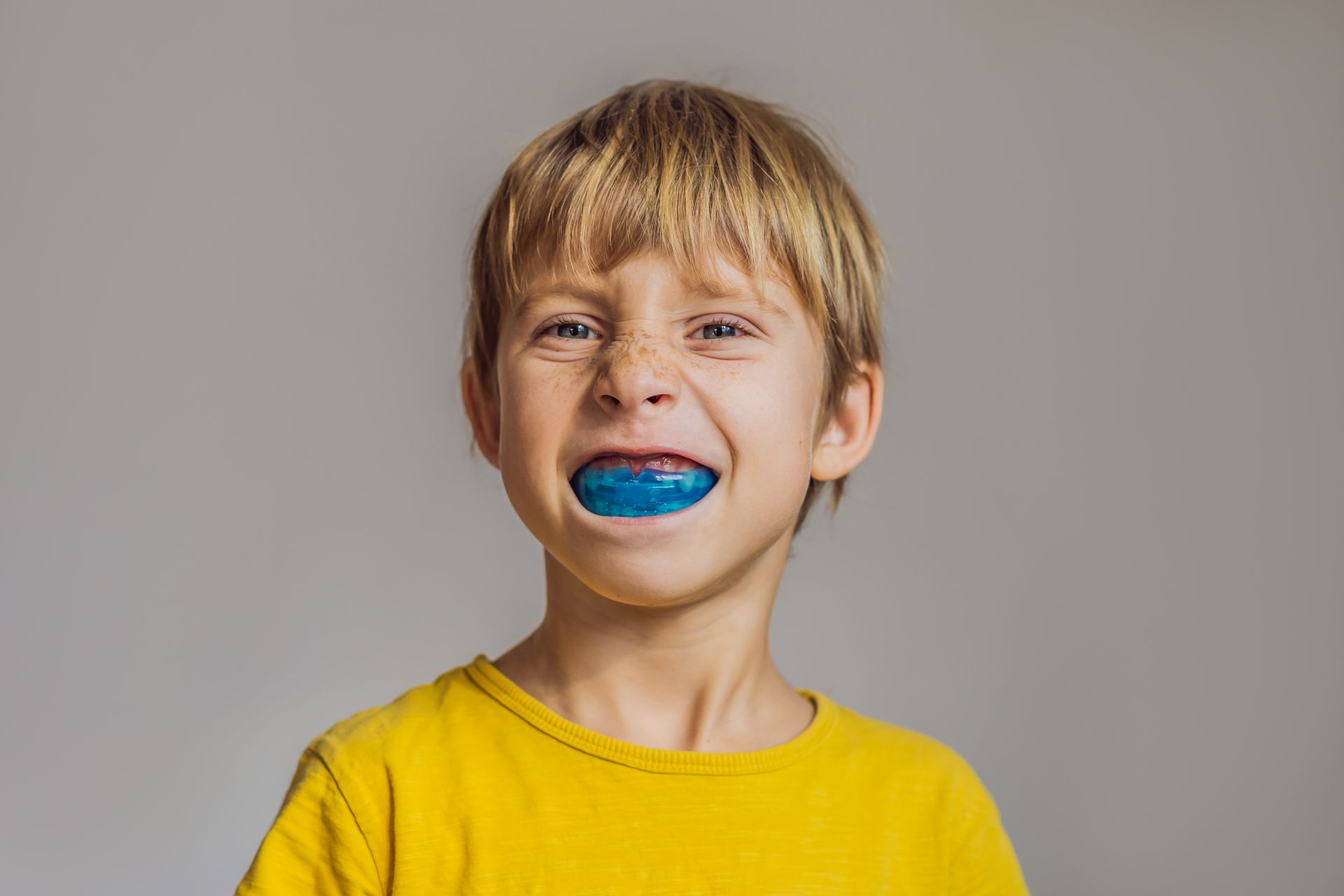
Not all mouthguards are created equal. There are three main types:
- Stock mouthguards are pre-formed and ready to wear right out of the package. They're the most affordable, but they often fit loosely, can be bulky, and may make it harder to breathe or talk.
- Boil-and-bite mouthguards are softened in hot water and molded to the teeth. They offer a better fit than stock options and are widely available at sporting goods stores.
- Custom-fitted mouthguards are made by a dentist based on an impression or scan of your child's teeth. They typically offer the most comfortable, secure fit, which matters because kids are more likely to actually wear a mouthguard that feels good.
The best mouthguard is the one your child will wear consistently, so comfort and fit matter as much as the type.
What About Kids With Braces?
If your child has braces or is in orthodontic treatment, a mouthguard is even more important, since a blow to the mouth can cut the lips and cheeks against the brackets and wires. Kids with braces generally need a mouthguard designed to fit over orthodontic appliances, and a regular boil-and-bite guard may not work well. It's worth asking your child's dentist or orthodontist which option is right for them.
Tips for Getting Kids to Actually Wear It
Even the best mouthguard doesn't help if it stays in the gym bag. A few ways to encourage good habits:
- Let them help choose. Kids are more likely to wear a guard in a color or style they picked out themselves.
- Make sure it fits well. A guard that feels bulky or slips around is more likely to end up left behind.
- Make it part of the routine. Pack it alongside cleats and water bottles so it's just part of getting ready.
- Lead by example. Reinforce that mouthguards are standard gear, just like helmets and shin guards.
Caring for a Mouthguard
A little upkeep keeps a mouthguard working well and keeps it hygienic:
- Rinse it with cool water or brush it gently with a toothbrush after each use
- Store it in a ventilated case, not loose in a bag
- Keep it away from heat, like a hot car, which can warp the material
- Check it regularly for wear, cracks, or a poor fit, especially since growing kids may outgrow their guard quickly
What to Do If a Dental Injury Happens
Even with a mouthguard, accidents can happen. If your child has a dental injury, quick action helps:
- For a knocked-out permanent tooth: Handle it by the crown (the chewing surface), not the root. Gently rinse it if it's dirty, and try to keep it moist, ideally in milk, and get to a dentist immediately. The sooner treatment happens, the better the chance of saving the tooth.
- For a knocked-out baby tooth: Don't try to put it back in, but do have your child seen by a dentist to check for any other injury.
- For a chipped or cracked tooth: Save any pieces if you can, rinse the mouth with water, and call your dentist.
- For lip, cheek, or tongue injuries: Apply gentle pressure to control bleeding and have it looked at if it's deep or doesn't stop.
Protecting Your Athlete's Smile This Season
A mouthguard is a small investment that can prevent a painful, and sometimes costly, dental injury. Taking a few minutes before the season starts to pick the right one can help your child play with more confidence.
If you're in San Marcos and have questions about mouthguards, braces, or what to do after a sports injury, Kidmazing Dental & Orthodontics is here to help keep your young athlete's smile healthy and protected all season long.